Reviving sacred forests in India: ecological and spiritual insights
By the EasyForest teamUpdated 3 min read
At a glance
Sacred forests in India are intentional groves of native trees aligned with stars, planets, elements or deities, such as the Nakshatra, Navagraha, Panchabootha, Panchavati and Sarvadhaara Vana. Anyone with a small patch of land, about 250 sq ft, and a clear spiritual or ecological intent can revive one.
| Sacred forest | Dedicated to |
|---|---|
| Nakshatra Vana | The 27 star constellations |
| Navagraha Vana | The 9 planetary deities of Vedic astrology |
| Panchabootha Vana | Lord Shiva and the 5 great elements |
| Panchavati Vana | The Ramayana grove; family wellness and prosperity |
| Sarvadhaara Vana | Sai Baba, the universal spiritual anchor |
Introduction: A Land Where Trees Are Deities
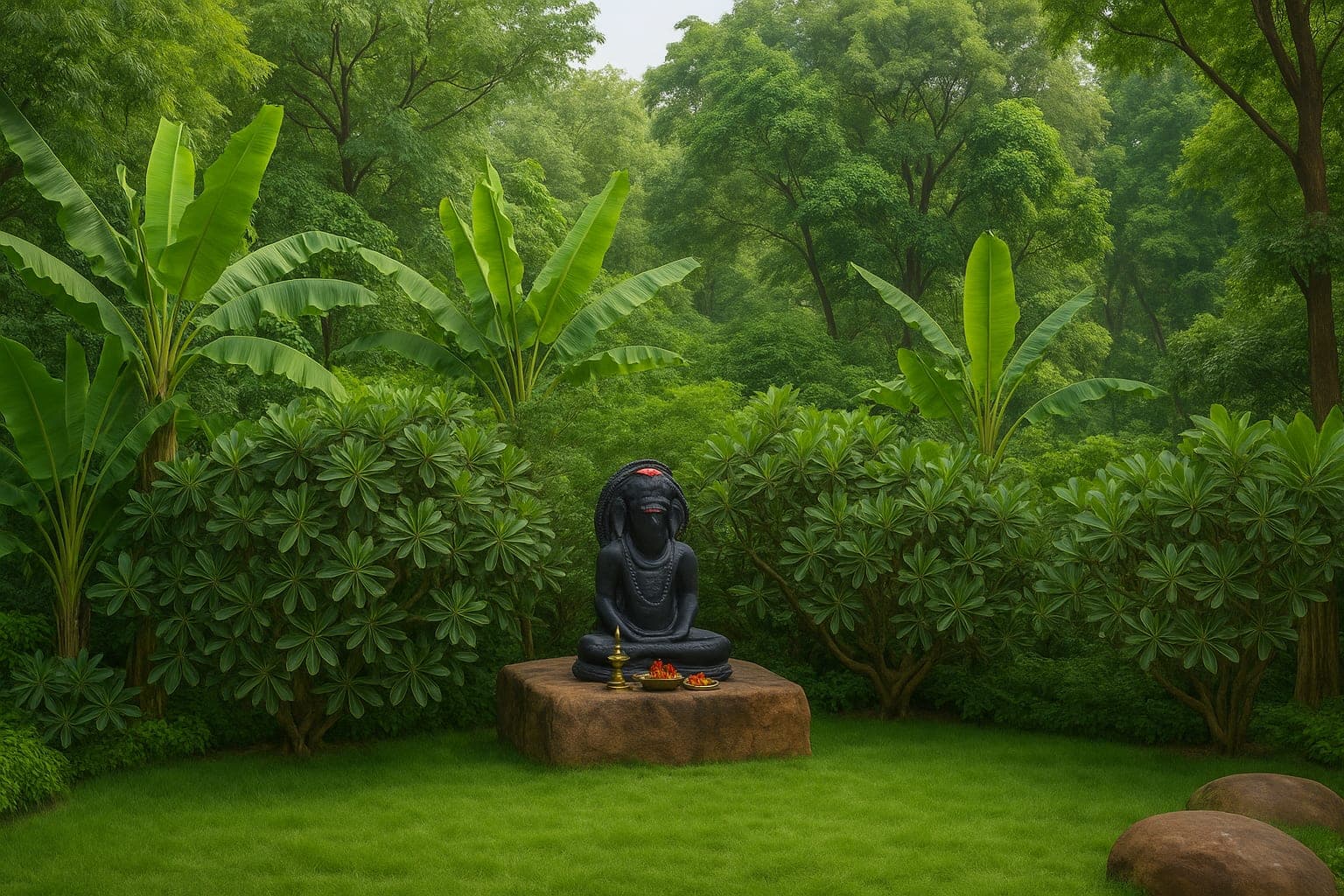
In the womb of Bharat Mata, beneath her sacred soil and above her whispering winds, lie truths that transcend time. India, the land of sages and seekers, has long revered the forest not merely as a cluster of trees, but as a living temple — a sacred forest, or Dev Vanam.
As our cities swell and silence is replaced by sirens, it is time we remember and revive the spiritual and ecological wisdom rooted in India’s ancient groves.
What Are Sacred Forests?
Sacred forests are not parks. They are intentional ecosystems aligned with cosmic energies, where each tree holds symbolic meaning. Traditionally protected by local communities and worshipped by entire villages, these forests are deeply interwoven with dharma and nature.
Types of sacred forests include:
- 🌟 Nakshatra Vana – A celestial forest linked to the 27 star constellations
- ☀️ Navagraha Vana – Dedicated to the 9 planetary deities of Vedic astrology
- 🌬️ Panchabootha Vana – Honoring Lord Shiva and the 5 great elements
- 🌲 Panchavati Vana – Referenced in the Ramayana, a grove of sacred trees for family wellness and prosperity.
- 🔱 Sarvadhaara Vana – Inspired by Sai Baba, the universal spiritual anchor
What the Scriptures Say About Forests
Ancient texts revered forests not as resources, but as realms of the divine.
🪶 In the Rig Veda:
“Vanaspate, namasteastu, Yasya te prana adhi.”
(Salutations to the trees — the life force resides in you.)
🪶 In the Ramayana:
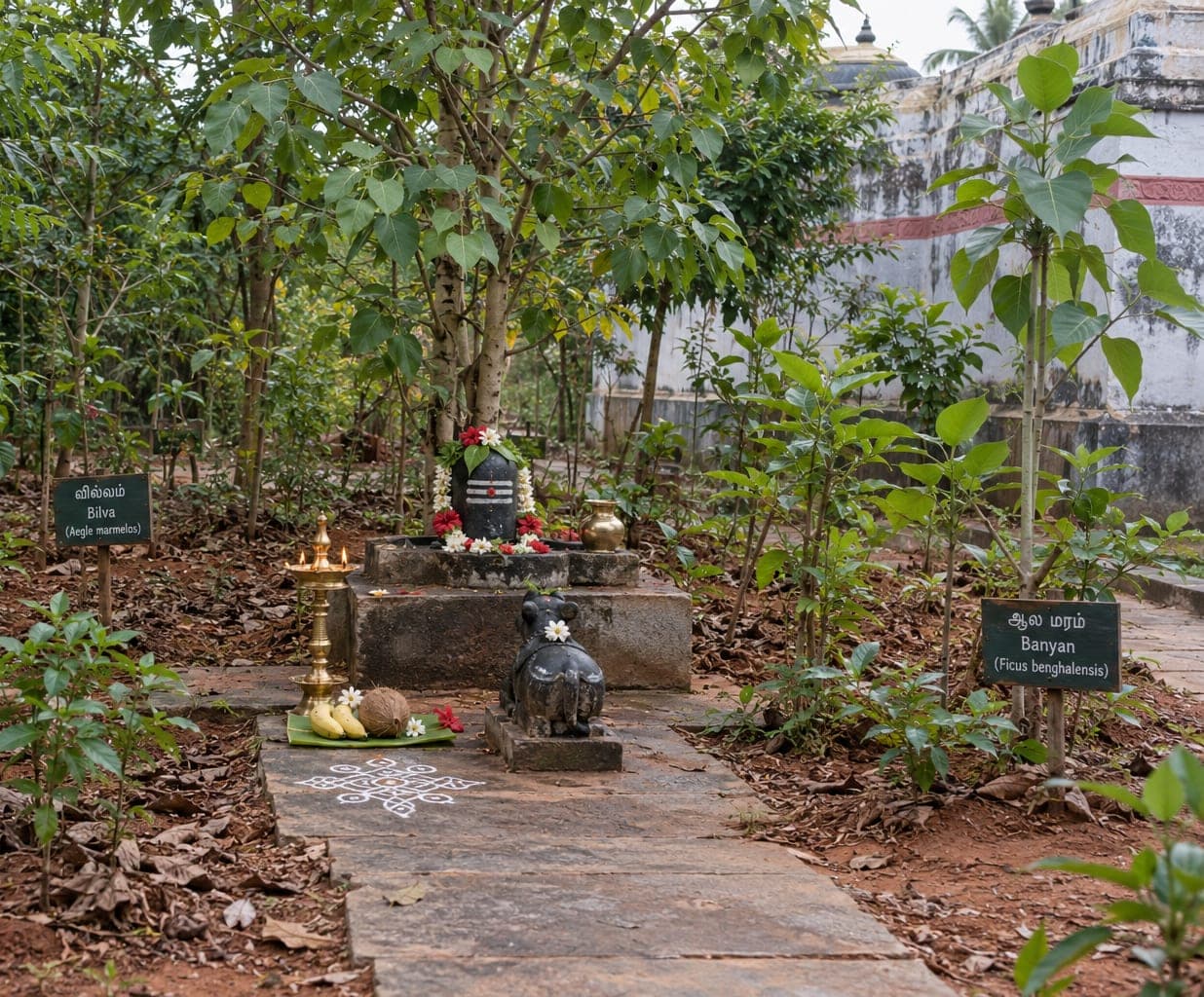
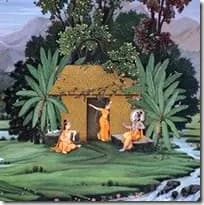
Lord Rama spent part of his exile in Panchavati, where five trees—Ashoka, Banyan, Peepal, Bilva, and Amalaki—shielded him and Sita from negative energies.
🪶 In the Mahabharata:
Yudhishthira once refused to cut a tree for firewood, saying, “If I harm that which sustains me, what dharma do I follow?”
A Personal Reflection: My First Sacred Grove
I recall during my travel in Tamil Nadu, an old man led us barefoot into a grove behind the village temple. “Speak gently,” he’d whisper. “The trees are listening.” There stood an ancient Peepal tree, its roots embracing a Swamy statue half-buried in moss. I remember watching villagers tie threads for wishes, pour milk in gratitude, and sit in silence beneath its shade. That sacred forest gave not only fruit and medicine, but faith and grounding.
Why Sacred Forests Matter Now More Than Ever
1. Ecological Harmony
- Dense forests bring back biodiversity
- Native species thrive without chemicals
- Groundwater is recharged, and carbon is absorbed
2. Spiritual Nourishment
- These groves become spaces for meditation, healing, and rituals
- Each forest reflects a cosmic force: stars, planets, elements, or deities
3. Cultural Revival
- They reconnect us with Vedic and Dravidian ecological wisdom
- Rural and urban youth alike find purpose in planting
Who Can Create a Sacred Forest?
You do not have to be a saint or a scholar. You simply need:
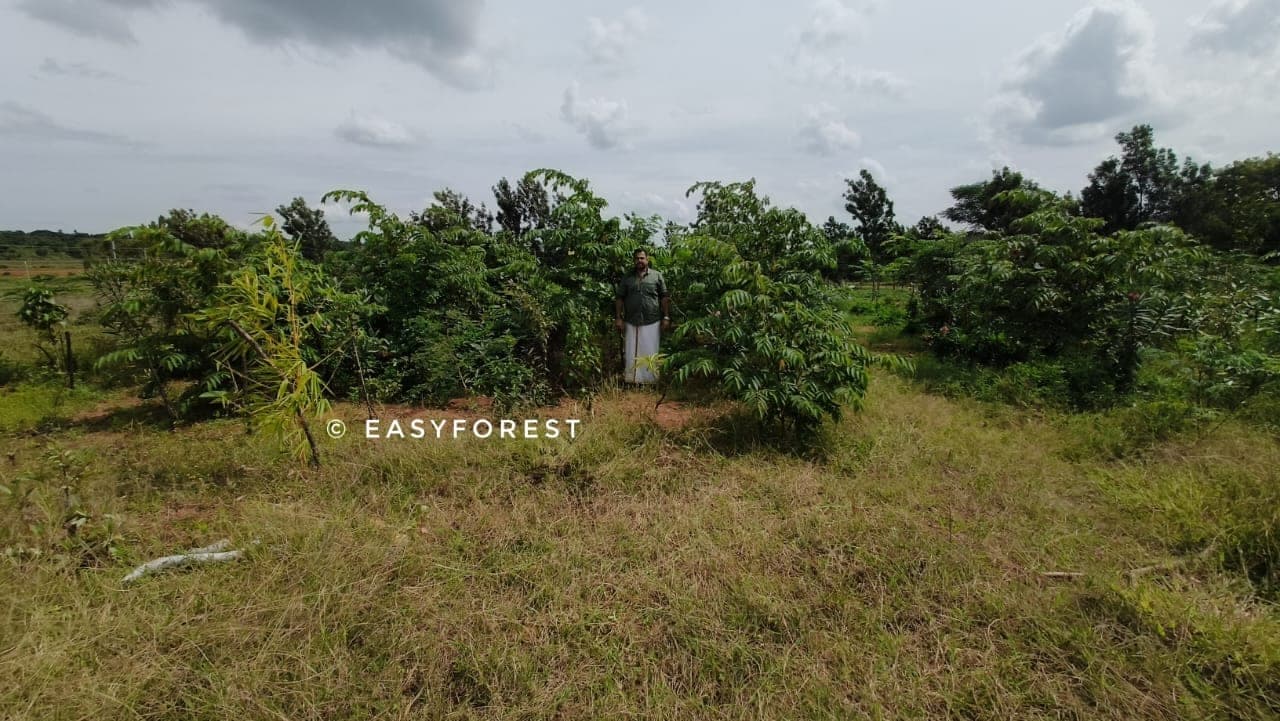
- A small patch of land (250 sq. ft.)
- A clear spiritual or ecological intent
- Guidance on species selection, Pooja rituals, and layout, which is where EasyForest (KALPAVRIKSHA) supports you
Whether you’re a:
- Landowner with a farm or backyard
- Temple trustee with unused land
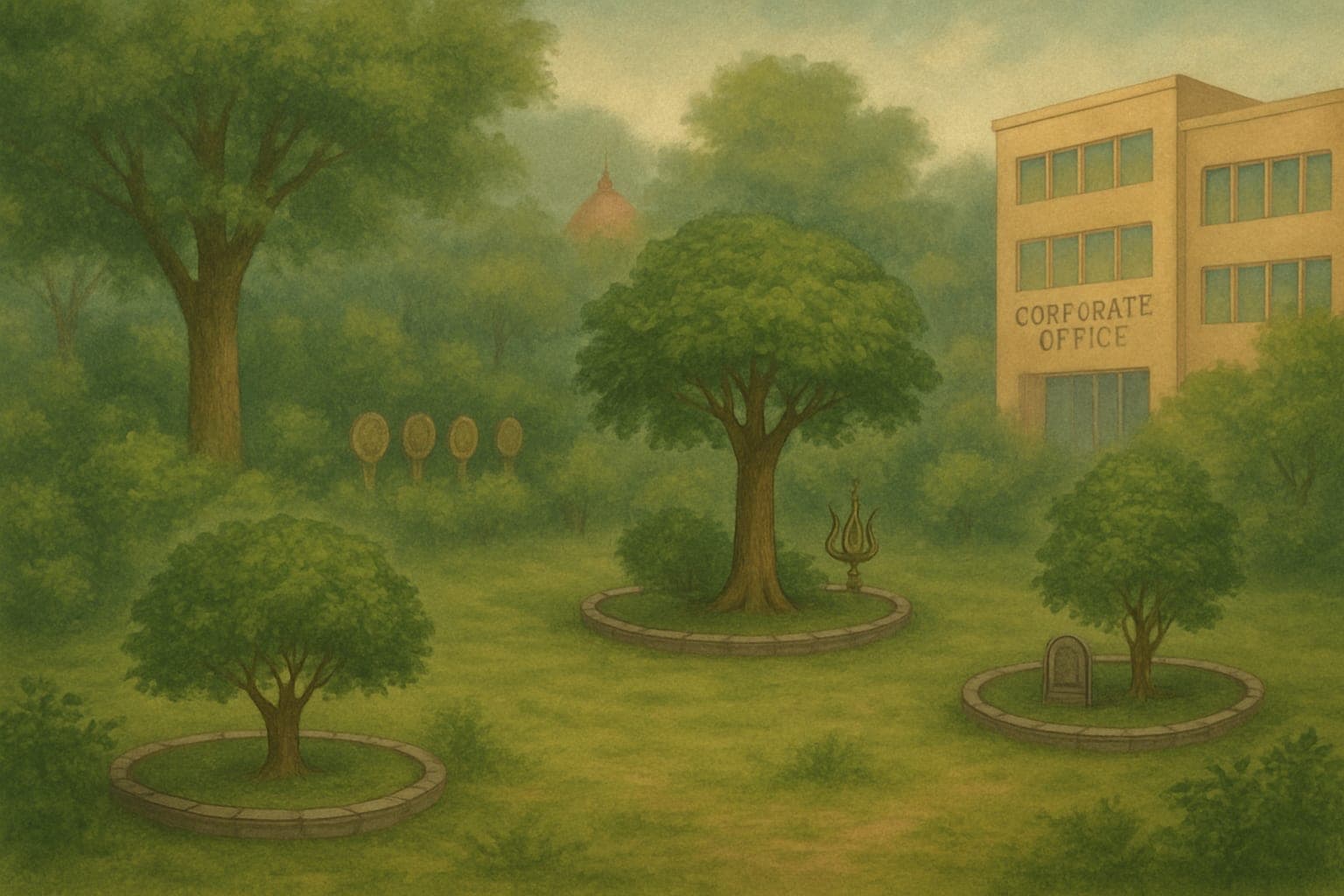
- Corporate with the CSR space
- A school, hospital, villa, or apartment community with a garden space
🌿 You can bring back sacred forests — right where you are.
Questions people ask
What is a sacred forest?
A sacred forest is not a park but an intentional ecosystem aligned with cosmic energies, where each tree holds symbolic meaning. Traditionally these groves were protected by local communities and worshipped by entire villages.
What are the types of sacred forests in India?
Nakshatra Vana for the 27 star constellations, Navagraha Vana for the 9 planetary deities, Panchabootha Vana for Lord Shiva and the five elements, Panchavati Vana from the Ramayana, and Sarvadhaara Vana, inspired by Sai Baba.
Which five trees grew at Panchavati?
In the Ramayana, Lord Rama spent part of his exile at Panchavati, where five trees, Ashoka, Banyan, Peepal, Bilva and Amalaki, shielded him and Sita from negative energies.
Why revive sacred forests now?
They bring back biodiversity, let native species thrive without chemicals, recharge groundwater and absorb carbon. They also become spaces for meditation, healing and rituals, and reconnect people with Vedic and Dravidian ecological wisdom.
How much land do I need to create a sacred forest?
A small patch of about 250 sq ft is enough, along with a clear spiritual or ecological intent. EasyForest (KALPAVRIKSHA) guides species selection, pooja rituals and layout; call or WhatsApp +91 87543 03296.